2026-10-12 · David Wallace
Dishwasher Not Draining? Causes and Solutions
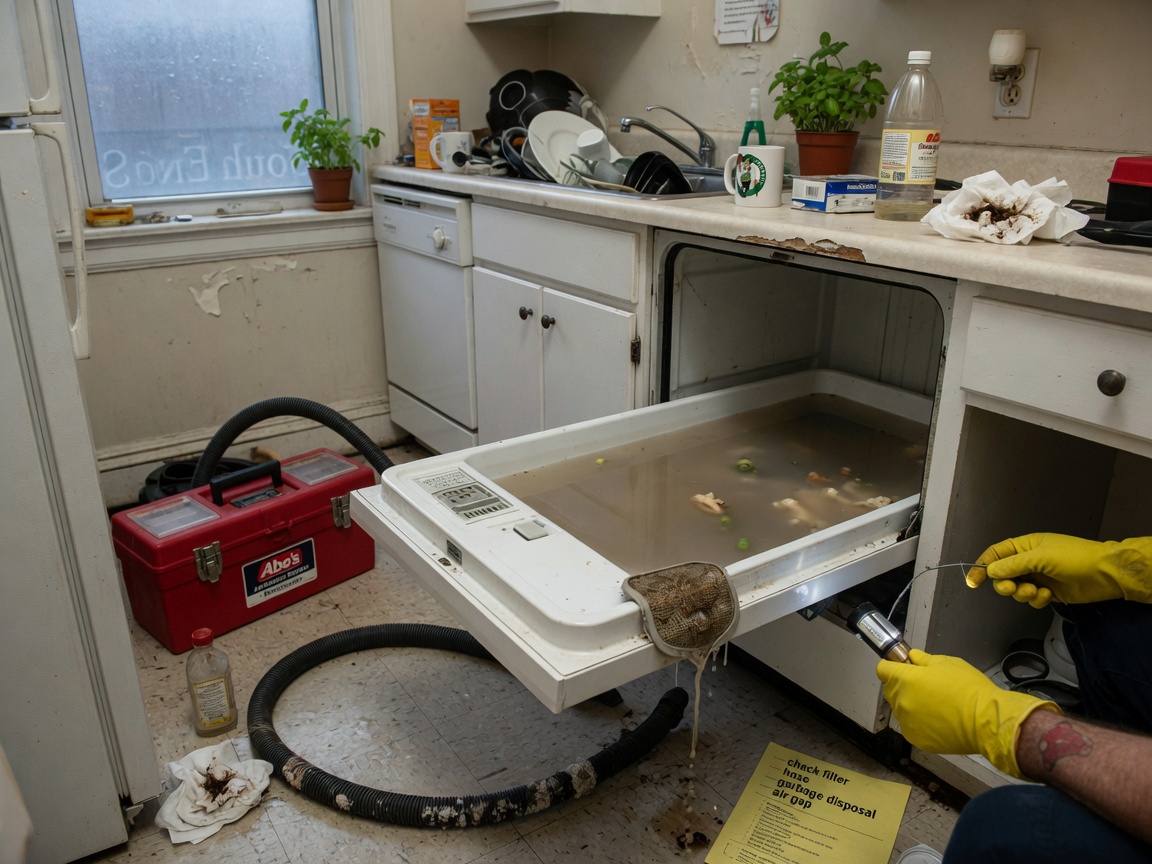
Dishwashers in Boston frequently fail to drain because of blockages in the filter, drain hose, or air gap, and these issues appear most often in homes built before 1950 where narrow pipes and sediment buildup slow water flow. In neighborhoods such as Beacon Hill and the South End, cast-iron lines from the early 1900s trap food particles and grease more readily than modern PVC, turning a minor clog into standing water within a single cycle. Checking the filter first resolves roughly half of these calls without parts or tools beyond a screwdriver.
Filter and Drain Hose Blockages
Start by powering off the unit and removing the lower rack to access the cylindrical filter at the base. In Suffolk County homes, coastal humidity accelerates grease congealing inside the filter screen, so rinse it under hot water and scrub with a soft brush if debris is visible. Next, detach the drain hose where it meets the sink or disposal and flush it with a garden hose; bends or kinks common under older cabinets in Back Bay row houses often trap debris. If water still pools after these steps, the hose may be pinched against the cabinet wall or degraded from years of detergent residue.
Air Gap and Garbage Disposal Connections
Many Boston dishwashers route through an air gap mounted on the sink deck, and this small fitting clogs quickly with food waste in dense households near Faneuil Hall or the North End. Remove the cap and clear the two small ports with a thin wire or pipe cleaner. When the dishwasher shares a line with a garbage disposal, run the disposal for 30 seconds before starting a cycle; jammed impellers in older disposals back water into the dishwasher drain. Residents in Cambridge and Somerville often discover that switching to a high-flow disposal model prevents repeat backups in multi-unit buildings.
Pipe Age and Seasonal Factors
Pre-1940 plumbing in Charlestown and Jamaica Plain narrows over decades from mineral scale carried by Massachusetts water, raising the risk of slow drainage during winter when colder supply water thickens grease inside the lines. The Atlantic-moderated climate keeps indoor humidity high year-round, so standing water in the sump breeds odors faster than in drier climates. If the unit sits on a slab or below-grade in East Boston, check the standpipe height; improper elevation allows siphoning that leaves residue behind after each cycle.
When Professional Service Is Required
Persistent drainage after filter and hose cleaning points to a failed drain pump or solenoid valve, components that typically last 8–12 years in high-use urban kitchens. Technicians familiar with downtown Boston stock at 50 Franklin St can test these parts on-site during Mon–Fri 8am–6pm or Sat 9am–2pm visits. For homes in Roxbury or Dorchester with galvanized supply lines, a full drain line inspection prevents water damage to plaster ceilings below. See our guide on How to Choose a Reliable Appliance Repair Service and consider Dishwasher Leak Repair or Garbage Disposal Replacement if the issue traces back to shared plumbing.