2026-10-12 · David Wallace
Why Is Your Dryer Not Heating Properly?
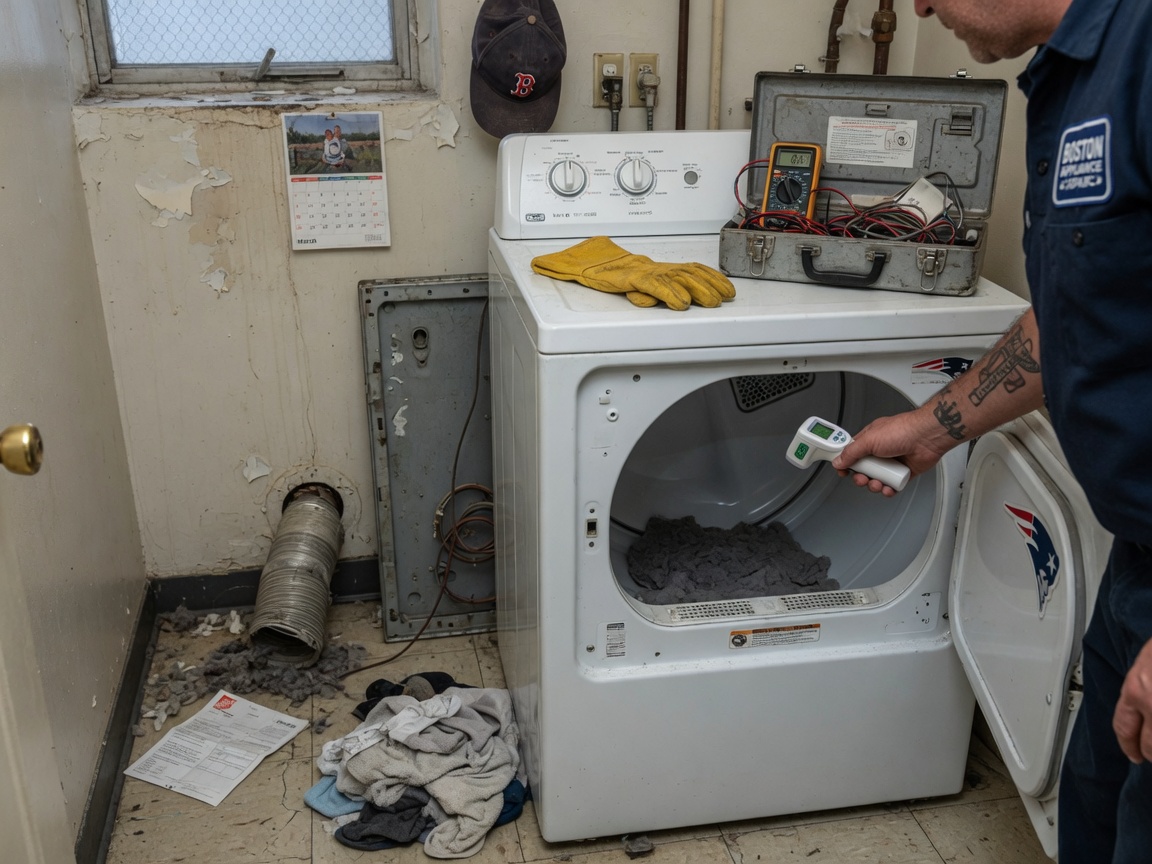
In Boston the most frequent cause of a dryer not heating properly is restricted airflow from lint buildup inside the vent, especially in homes across Back Bay, Beacon Hill, and the North End where narrow chases and long runs are common. The humid continental climate moderated by the Atlantic Ocean keeps moisture levels high enough that lint absorbs water and packs tighter, cutting heat delivery within two to three years if vents are never cleaned. Older two- and three-family houses in South Boston and Dorchester often share vent stacks that add extra length and turns, making the problem worse during the colder months when windows stay closed and dryers run more often.
Restricted Airflow in Historic Boston Homes
Many buildings in the North End and South End were constructed before modern dryer venting standards existed. Vents may travel twenty or thirty feet through brick walls and multiple floors before reaching the exterior, creating places where lint collects. The Atlantic-moderated humidity adds surface moisture that turns loose lint into a dense mat, which then blocks exhaust and trips the high-limit thermostat. Residents in Cambridge and Somerville face the same issue in triple-deckers where vents exit through attics that stay cold most of the winter. Checking the vent flap outside for weak or no airflow gives an immediate sign that cleaning is needed before the heating element works harder and fails early.
Faulty Heating Element or Thermal Fuse
When airflow is clear but heat is still missing, the electric heating element or gas burner assembly is the next item to inspect. In Suffolk County homes with appliances eight to twelve years old, the element can develop hot spots and break, especially after repeated cycles with restricted exhaust. Gas models common in Brighton and Allston sometimes suffer from clogged burner orifices caused by the same humid air that promotes rust. A failed thermal fuse, usually located on the blower housing, cuts power to the element as a safety measure once temperatures rise from poor venting. These parts sit behind the rear panel and require specific voltage checks with a multimeter to confirm failure rather than guessing.
Thermostat, Sensor, and Control Board Problems
The cycling thermostat and moisture sensor work together to regulate heat. In older units found throughout Jamaica Plain and Roxbury, these components drift out of calibration after years of temperature swings from the coastal climate. A sensor coated with fabric softener residue may read the load as dry and shut heat off prematurely. Control boards in newer high-efficiency models can also lose the ability to interpret sensor data, leaving the dryer stuck on a no-heat setting. Testing involves measuring resistance across the thermostat terminals at room temperature and comparing the reading to the manufacturer spec, which is typically around 10k ohms for many common brands.
Practical Steps and When Professional Help Is Needed
Start by unplugging the dryer, disconnecting the vent hose, and running a short cycle to feel for strong exhaust at the outdoor termination. If airflow feels weak, schedule Dryer Vent Cleaning and Repair before replacing parts. Next inspect the lint screen and the area behind it for hidden buildup. When the vent is clear yet heat remains absent, note the model number and age of the unit. For homes in Charlestown or East Boston where space is tight, moving the dryer for deeper diagnosis is often best left to technicians familiar with local layouts. Review the guide Essential Dryer Vent Cleaning and Safety Tips for seasonal checks that match Boston weather patterns, and consult How to Choose a Reliable Appliance Repair Service if multiple appliances show similar symptoms.