2026-10-12 · David Wallace
Signs Your Freezer Needs Professional Repair
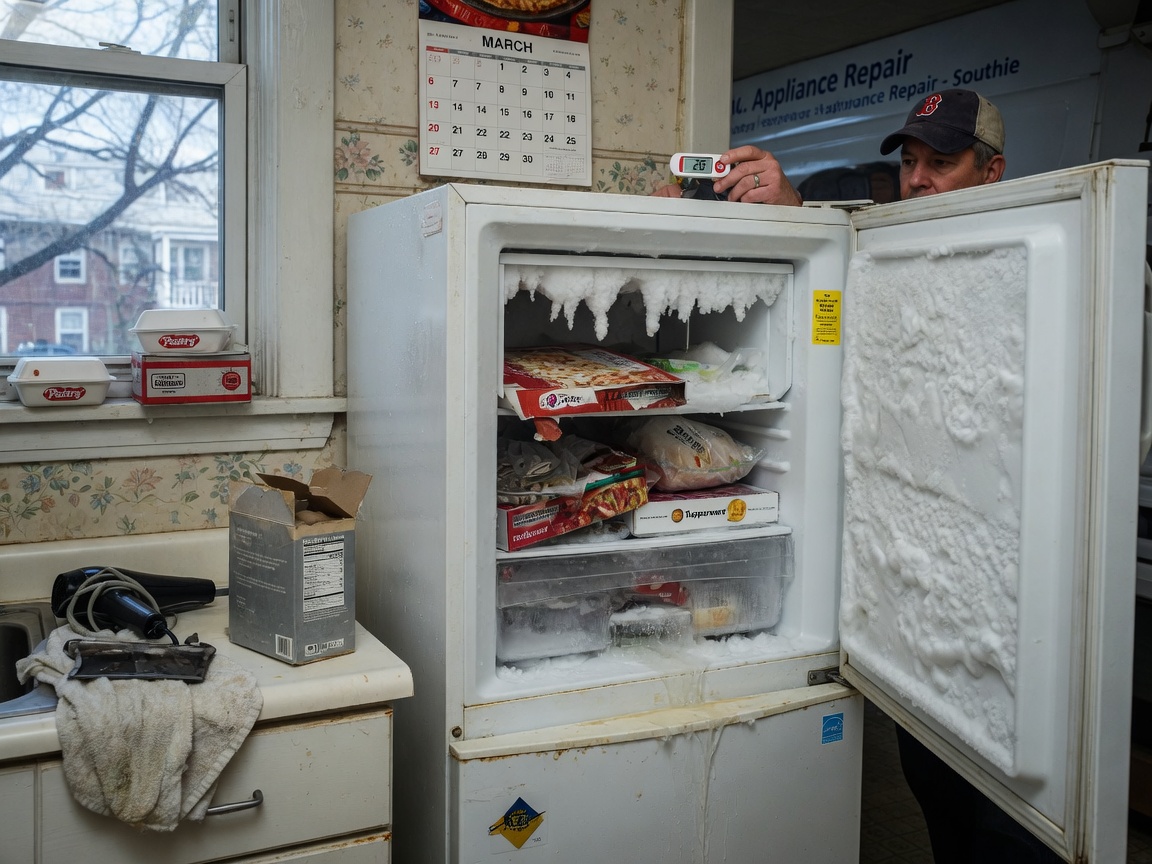
Freezers in Boston typically show failure to hold steady 0°F temperatures, persistent frost on coils, or unusual compressor noises as the earliest signs they need professional attention. These symptoms appear frequently in historic buildings across Beacon Hill and the North End where tight mechanical spaces and age-related wear accelerate component stress. The Atlantic-moderated humid continental climate brings damp summers that strain door seals and increase defrost cycles, while cold winters can make startup issues more noticeable in unheated basements common to triple-deckers in Dorchester and Jamaica Plain.
Unusual Noises During Operation
Older freezers in Back Bay brownstones and South End row houses often develop grinding or clicking sounds when the compressor struggles against humidity-driven moisture. These noises usually start intermittently during peak summer humidity before becoming constant. Technicians familiar with Suffolk County stock notice that units installed in tight utility closets near Boston Common experience faster motor wear because airflow is restricted. Checking the condenser fan for debris from nearby construction along the Freedom Trail route can rule out simple causes, but persistent rattling after 8–12 years of service points to bearing failure that requires part replacement rather than DIY fixes. Similar patterns appear in Cambridge and Somerville rentals where shared walls transmit vibrations more noticeably to residents.
Excessive Frost or Ice Accumulation
Heavy frost layers forming within days after defrosting signal faulty door gaskets or defrost timers, especially in humid conditions near Boston Harbor. In Charlestown and East Boston homes built before widespread central air, temperature swings between seasons force the unit to work harder and ice over evaporator coils. Homeowners along the Freedom Trail often report this issue in compact galley kitchens where doors are opened frequently. When frost reaches the point that packages freeze together or the interior temperature rises above 10°F, the defrost heater or thermostat has likely failed. Professional diagnosis prevents water damage to surrounding cabinetry once thawing begins in these dense urban layouts.
Temperature Inconsistencies and Spoilage
Freezers that cycle between freezing and thawing cause repeated ice crystal formation on food, a common complaint in Roxbury and Allston households with older appliances. The moderated ocean climate keeps outdoor temperatures variable enough that basement units in Brighton experience more frequent defrost events than expected. When the interior stays above 0°F for more than a few hours despite controls set correctly, the thermostat or start relay needs testing. This problem compounds in high-end models with electronic boards found in Seaport District condos, where smart features can mask early sensor drift until multiple items spoil. Consistent readings above 5°F warrant immediate evaluation to protect stored food through the long Boston winter.
Water Leaks and Condensation Problems
Puddles forming under the unit or excessive exterior sweating often trace to clogged defrost drains, a frequent issue in North End apartments with limited floor space. The combination of salty air from Boston Harbor and older plumbing in South Boston increases corrosion on drain lines after 7–10 years. When leaks appear near the compressor compartment, the defrost heater may be stuck on, melting ice faster than the pan can handle. Residents in Jamaica Plain note that these leaks can damage hardwood floors typical of the neighborhood. Addressing the root cause early avoids secondary mold growth in the humid local environment.
Deciding on Repair Versus Replacement
Units older than 10 years in Beacon Hill or Back Bay that show multiple signs usually cost more to repair than replace, especially when the compressor fails. Technicians compare the expense of parts like evaporators against current energy-efficient models suited to local voltage and space constraints. In cases involving refrigerator repair on combined units, addressing the freezer section often resolves related cooling problems throughout the appliance. For standalone chest models with ice maker repair needs, targeted component replacement can extend life another 3–5 years. Readers facing similar appliance questions may also find value in Common Oven Problems and When to Call a Professional.